Over the past few months, we’ve launched new partnerships, trained facilitators across Ecuador, welcomed research collaborators, and had opportunities to share our work internationally. Here are a few highlights.
Bringing Care to More Corners of Ecuador
One of our biggest developments this year has been a new partnership with the Association of Ecuadorian Municipalities (AME).
Two years ago, we began shifting our strategy away from expanding primarily by hiring our own facilitators. While that approach worked well, I eventually did the math on what it would cost to reach the entire country. Let’s just say the spreadsheet was not encouraging.
Instead, we’ve been exploring whether we can train and support existing government staff to deliver evidence-based depression treatment. Municipalities already have employees, infrastructure, and relationships with communities, potentially allowing us to reach far more people at a fraction of the cost.
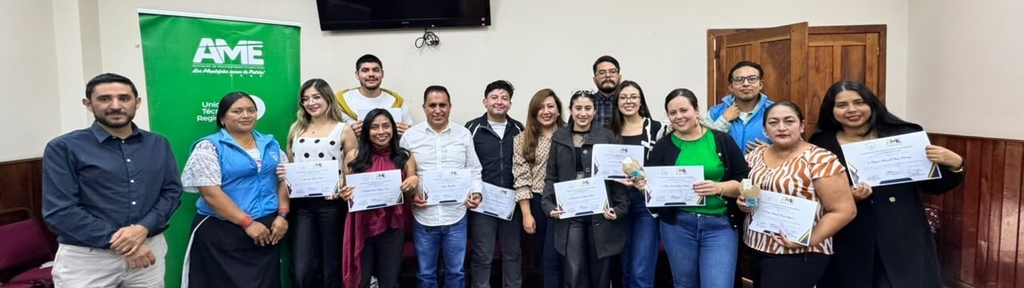
Our partnership with AME is an important step in testing that model. In July and August, we trained 19 facilitators from eight municipalities, alongside AME staff, through two intensive training cohorts in Quito and Cuenca.
Now comes the harder part. We’re working with these municipalities to help their newly trained facilitators recruit participants, organize their groups, and begin delivering treatment.
We’ve learned that getting someone to attend a five-day training and getting their institution to make room for them to actually use those skills are two very different accomplishments.
There’s plenty more to figure out, particularly around implementation costs, institutional commitment, and maintaining treatment quality as we grow. I’ll share more about what we’re learning in a future update.
Another year of working alongside Indigenous women in Imbabura
We’re thrilled to have received a second grant from FaroVerde, through Fundación Niños para Ecuador, to continue our Sanando Juntas program!
Our first grant helped us expand our team of local facilitators, reach rural communities, and begin adapting our materials for Kichwa-speaking participants.
With this second grant, we’re aiming to reach at least 350 additional women through free, evidence-based depression treatment.
Our facilitators are from the communities where they work, and that matters enormously. They know the local languages, cultural practices, and social dynamics, and can make the treatment relevant to people’s everyday lives.
But perhaps the best way to understand why this work matters is to hear directly from someone who has experienced it. In this touching interview, one of our participants in Imbabura shares her personal story and what being part of Vida Plena has meant to her.
Why do people sign up for free therapy and then never attend?
This has been a persistent frustration for us at Vida Plena. We know our treatment can be effective, but a substantial proportion of people who sign up never actually start or attend only a few sessions.
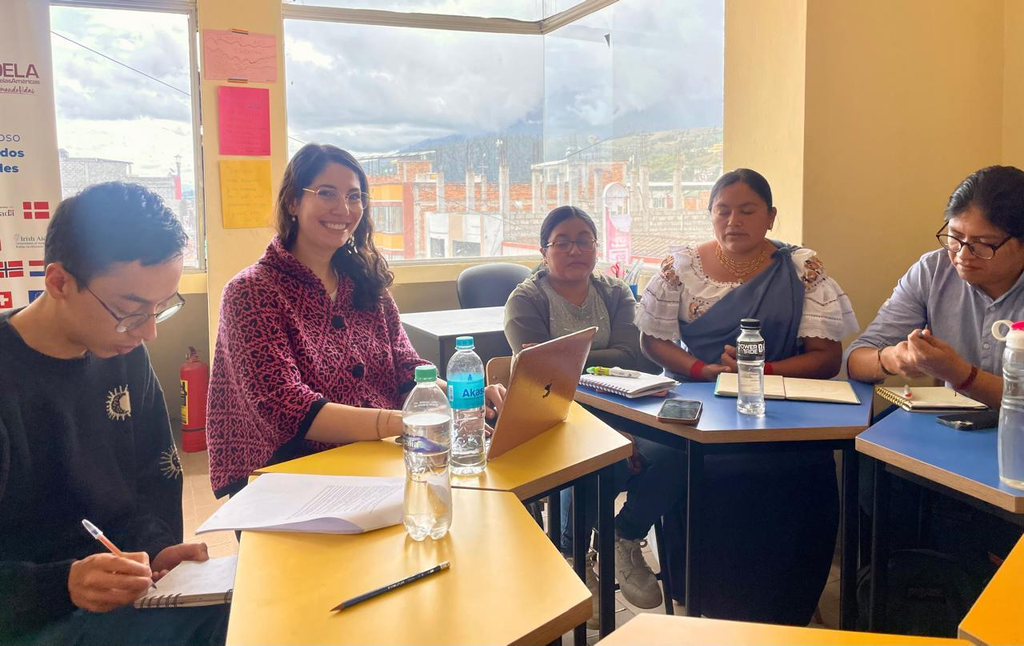
We’ve been collaborating with Dr. Samantha Kassirer and the Agency Fund to better understand why.
We’ve historically focused on practical barriers such as transportation, childcare, and work schedules. But Sammy has encouraged us to look more carefully at people’s expectations and beliefs about therapy. Do they think it will help? Will they enjoy it? Are they concerned about how others might perceive them?
Sammy’s visit gave us a chance to explore these issues more closely, and we’re now working toward testing different approaches to improving participation.
There’s a potentially important efficiency gain here. If we can help more of the people already interested in our services complete treatment, we could increase our impact without needing to recruit more participants.
We’re still investigating which barriers matter most, but I’m looking forward to sharing more as the research develops.
My first academic conference (and more than a few nerves)
This year, I attended my first-ever academic conference. And somehow I also ended up presenting at it.
I felt very grown-up. Also mildly terrified.
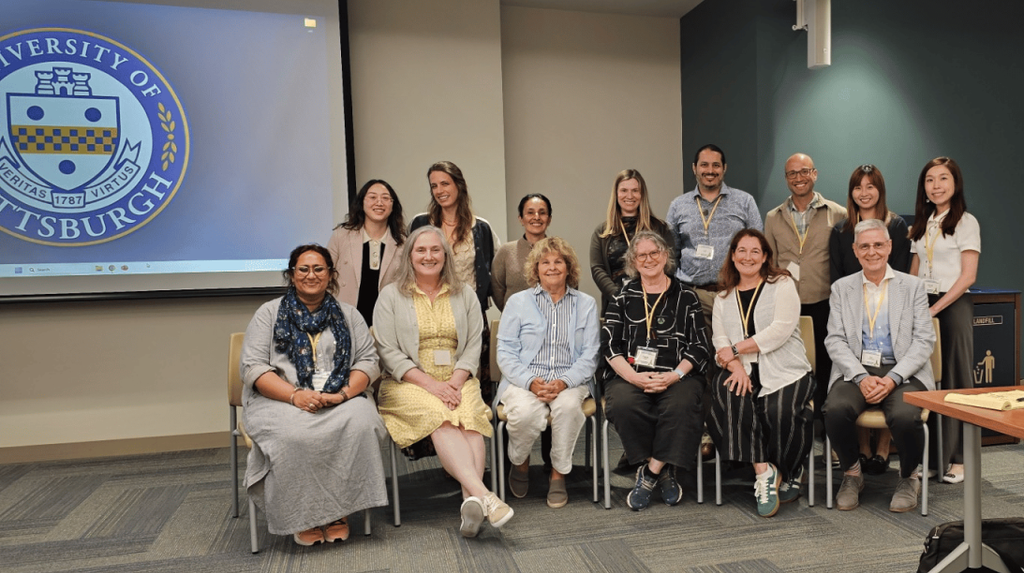
I owe this opportunity entirely to Dr. Lena Verdeli and her colleagues at Columbia University, who generously included me in their symposium at the International Society for Interpersonal Psychotherapy (ISIPT), alongside researchers presenting work from Peru and Colombia.
A huge thank-you to Lena and Ángela Paredes-Montero for helping me prepare and making the whole experience considerably less intimidating!
I presented some of what we’ve been learning about how our local facilitators adapt group interpersonal psychotherapy to the communities where they work.
The treatment model has a strong evidence base, but implementing it in communities with different languages, cultural norms, and ways of understanding emotional distress requires considerable judgment. Our facilitators routinely find creative ways to explain therapeutic concepts, use locally relevant examples, and build trust with participants.
This has been particularly interesting in our work with Kichwa-speaking communities, where even apparently straightforward concepts don’t always have direct translations.
These adaptations are largely driven by the facilitators themselves, drawing on their own knowledge of their communities. Our challenge is to support that flexibility while ensuring the core components of the treatment remain intact.
It was a privilege to share their work with researchers who have contributed so much to the development of IPT.
Making better use of our data
In July, our Monitoring and Evaluation Associate, Diego Parra, presented Vida Plena’s work at a session hosted by Catalyst Now’s Mental Health Collaboration, which I currently co-chair along with several dear colleagues.
We were joined by the Shamiri Institute from Kenya, and the discussion focused on the practical challenges of building monitoring and evaluation systems as small mental health organizations grow.
Diego shared how we’ve developed our data systems, what we track, and some of the experiments we’ve been running to improve data collection.
For example, we’ve been testing different approaches to our three- and six-month follow-up evaluations to understand how participants are doing after completing treatment. We’ve also been looking more closely at how attendance, facilitator characteristics, and other factors relate to outcomes.
Good data collection is surprisingly expensive in staff time, so we’re constantly trying to distinguish between genuinely useful information and information we collect simply because we can.
For anyone interested in the technical side, you can read the session summary and see Diego’s slides, or watch the full presentation:
Plus, a little travel along the way
In addition to the ISIPT conference, I also had the chance to attend the Skoll week in Oxford, UNGA in New York, and EAG in New York. It’s been useful to exchange ideas with people tackling very different global challenges, many of whom are wrestling with similar questions about impact, cost-effectiveness, and scaling.
I even managed to squeeze my college reunion between the two New York events. I’ll leave it to your imagination which reunion that was ; )
As always, none of this would be possible without our wonderful Vida Plena team, our partners, and the many people who have believed in this work and helped us along the way. I’m so grateful for all of you.
Whether we’ve known each other for years or you’ve only recently started following our work, I’d love to hear from you. Feel free to get in touch!
I’ll be sharing more soon about what we’re learning as we try to bring mental health care to more communities without compromising quality. Turns out, training facilitators is only the beginning!
Saludos from Quito,
Joy