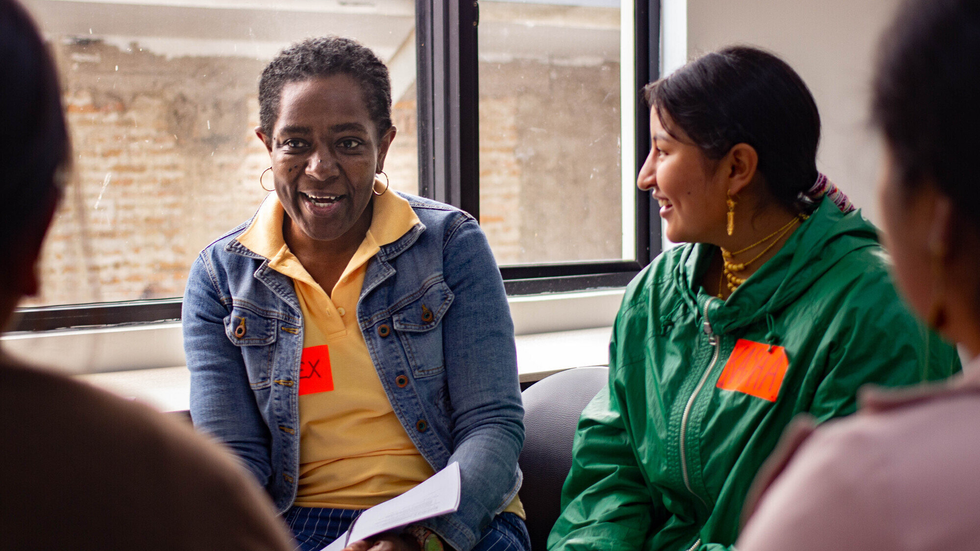
At the end of one of our groups last year, a teenage girl came up to me and said: “Thank you for helping my mom.”
I had spoken with her mom a few weeks earlier when things were really not okay. That conversation stayed with me. But that small comment from her daughter stayed more.
I think about it a lot when I’m looking at spreadsheets.
We just finished our 2025 impact report, and I’ve been trying to figure out how to summarize the year. It didn’t feel so big and shiny; rather, it felt more like a year when we stress-tested the model. Does this actually work outside of ideal conditions? Does it still work when things get messy? The question we’re sitting with is whether that can work not just in theory, but in practice, at scale.
For context, our model is simple in concept:
Deliver evidence-based mental health care through group therapy, run by trained community members, and then work with governments to scale it.
Which sounds straightforward. It’s not.
A few things we’re seeing
- Symptoms are dropping in a meaningful way (9-point average reduction on the PHQ-9)
- Suicide risk decreased by 68%
- And importantly, we’re seeing similar outcomes when the model is delivered through public systems, not just our own team
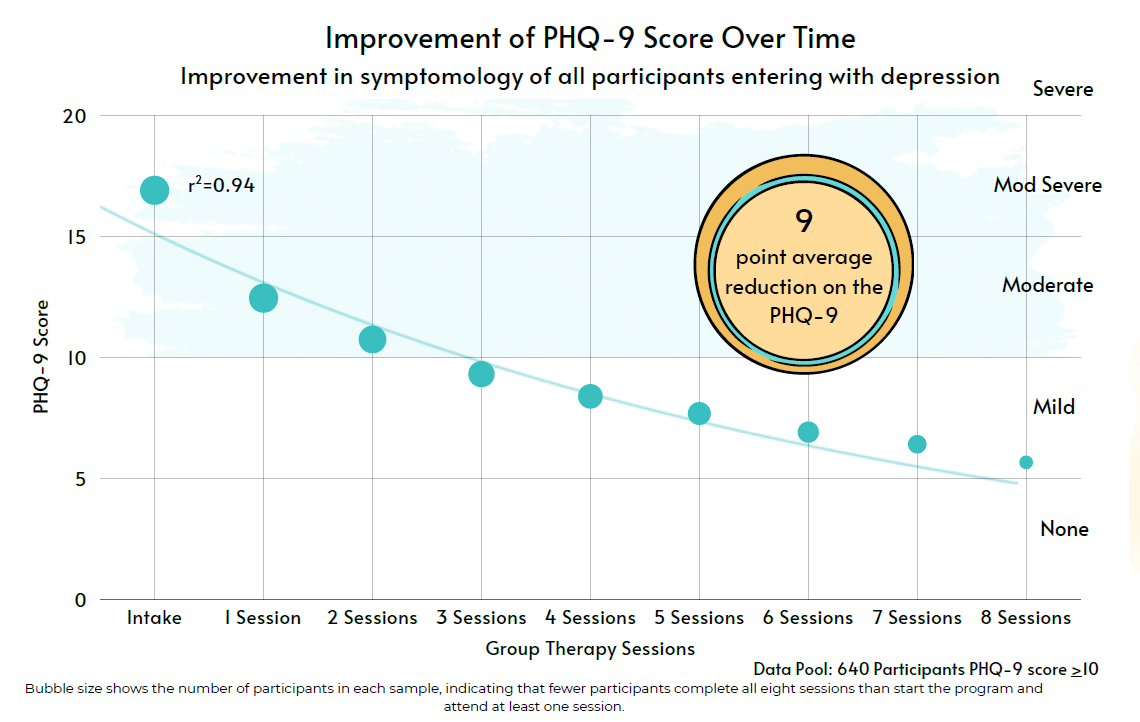
What matters here is not just that scores go down, but that participants move below the clinical threshold.
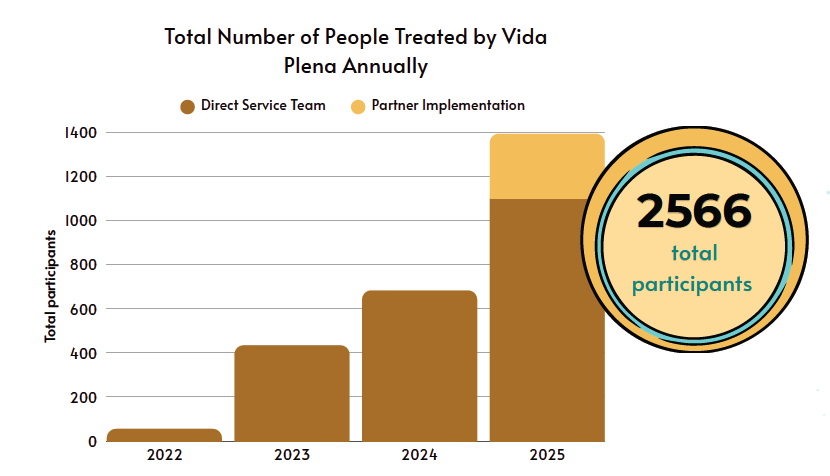
We reached 1,394 participants this year, more than double last year.
But the number itself isn’t the point. Facilitators can be trained and supervised without being specialists. And governments already have the infrastructure. So the question becomes less “how many people can we reach?” and more “how many systems can adopt this?”
Read the full report (English and Spanish)
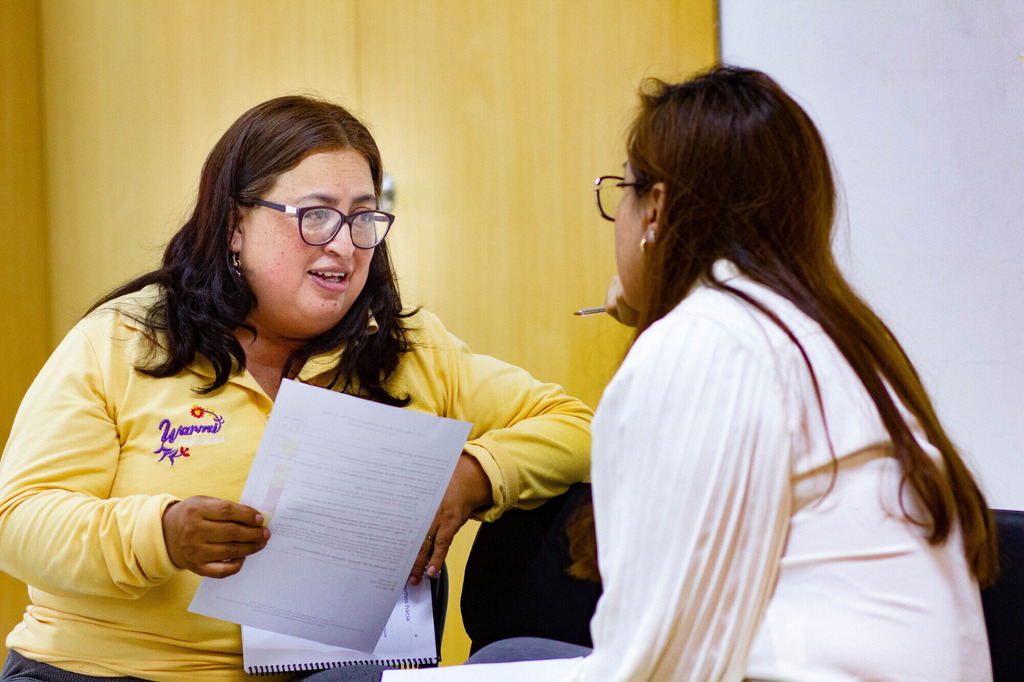
One of the clearest signals this year came from our work with the Quito Health Department. We partnered with them on a two-phase pilot, working closely alongside their team to run around 30 groups within the public system. And the outcomes held, even within a government setting.
At the same time, the year wasn’t all smooth. In Imbabura, political violence paused work for weeks. Meanwhile, government processes slowed as departments reorganized, and we were navigating team transitions internally.
But through all of that, our team ran 195 groups. Attendance rose. People are getting better.
This is how one Vida Plena participant described that change: “Seeing other people keep going motivated me. Every small step is a win.”
Where this leaves us
We’re increasingly confident the model works. The open question is how to scale it without losing quality.
Our focus now is:
- Expanding government partnerships
- Strengthening training and supervision
- Continuing to track outcomes as we grow
This work is never the effort of a single person or even a single team. It is built by facilitators showing up each week, operations staff navigating complexity, a wide network of donors, volunteers, and so many cheerleaders who make our work possible.
Thank you for being part of it.
Con mucho amor,
Joy