
When people think about scaling mental health care, they often imagine opening more programs or reaching new communities.
But much of the real work happens behind the scenes: training facilitators, strengthening partnerships, and refining the tools that help people deliver care well.
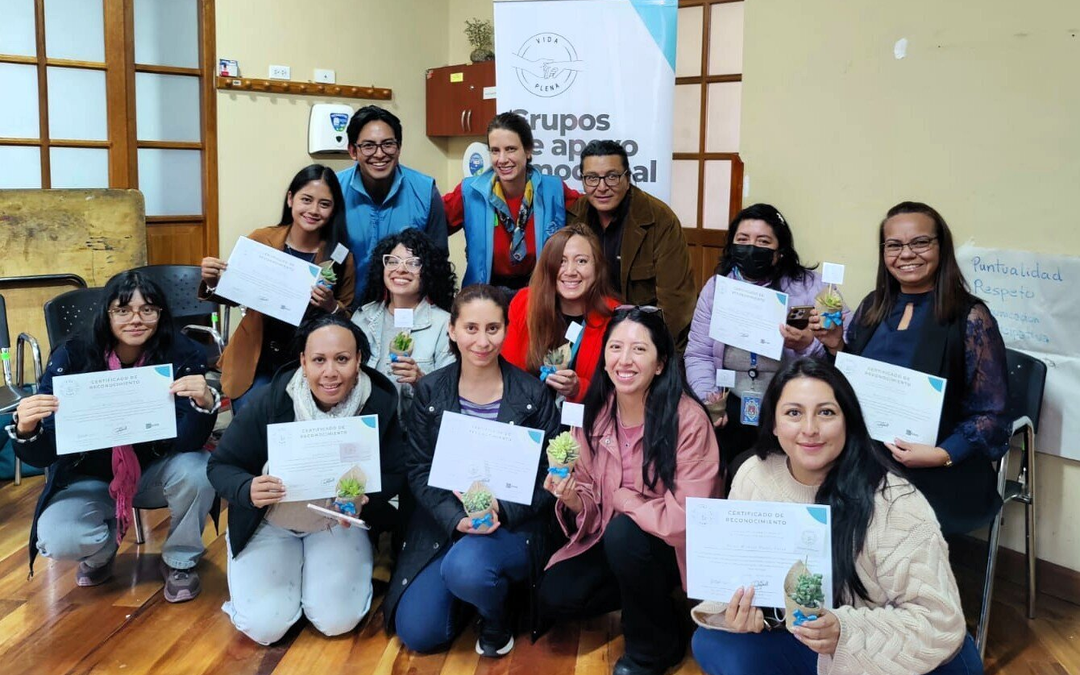
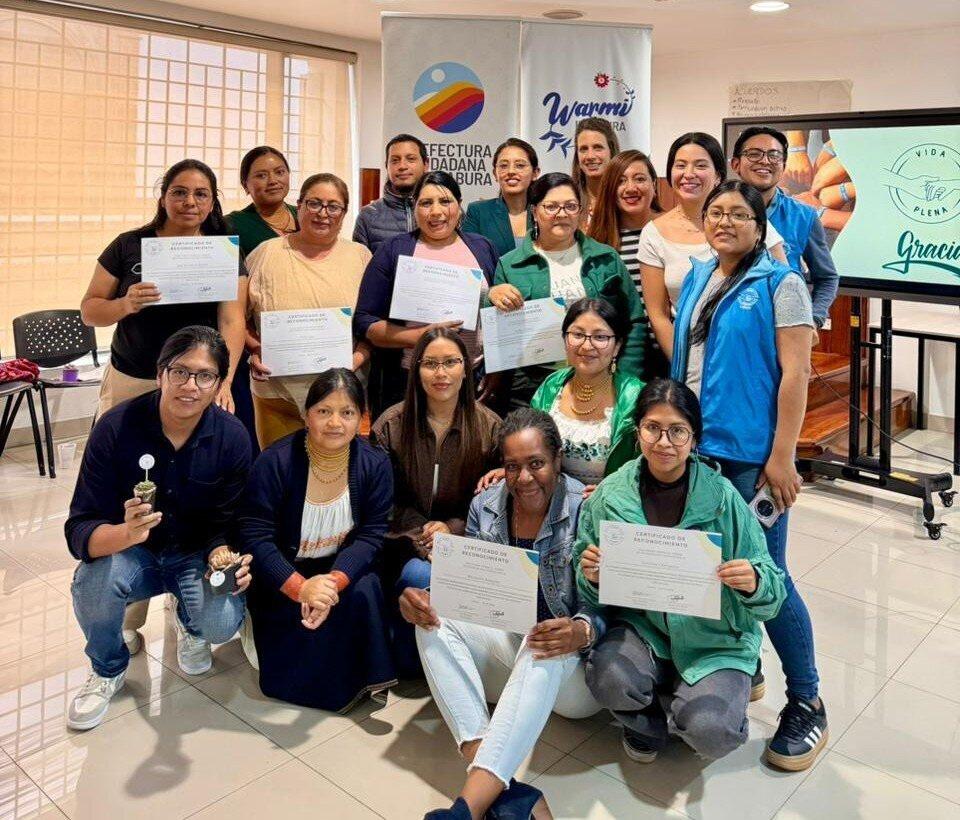
Over the past few months, Vida Plena has been focused on exactly that. Since our last update, we’ve completed three facilitator trainings, working with Vida Plena facilitators and partners from local government institutions.
Here are a few glimpses of that work.
This training cycle:
- 3 facilitator trainings completed
- 30 government staff trained (Warmi Imbabura + Patronato San José)
- 8 new Vida Plena facilitators (including Kichwa-speaking and Venezuelan facilitators)
- Potential reach: ~1,000 participants over the coming year
New Facilitators, New Partnerships
Over the past six months, Vida Plena has expanded its facilitator network and begun working with a wider range of partners and communities.
This new work includes four different groups:
- Kichwa-speaking communities in Imbabura: through four new facilitators supported by La Fondation pour les Enfants de l’Équateur (FEÉ)
- Venezuelan migrant communities: through four new facilitators supported by Bastion Life
- Survivors of gender-based violence: through our partnership with the provincial government office of Warmi Imbabura
- Older adults in Quito: through staff from the City of Quito’s Patronato San José
Bringing these facilitators and institutions into the same training spaces helps us test how the model works across very different populations while building capacity across the system.
Together, our work now includes 20 Vida Plena facilitators and 45 facilitators working through partner institutions across four organizations.
Facilitators Becoming Trainers
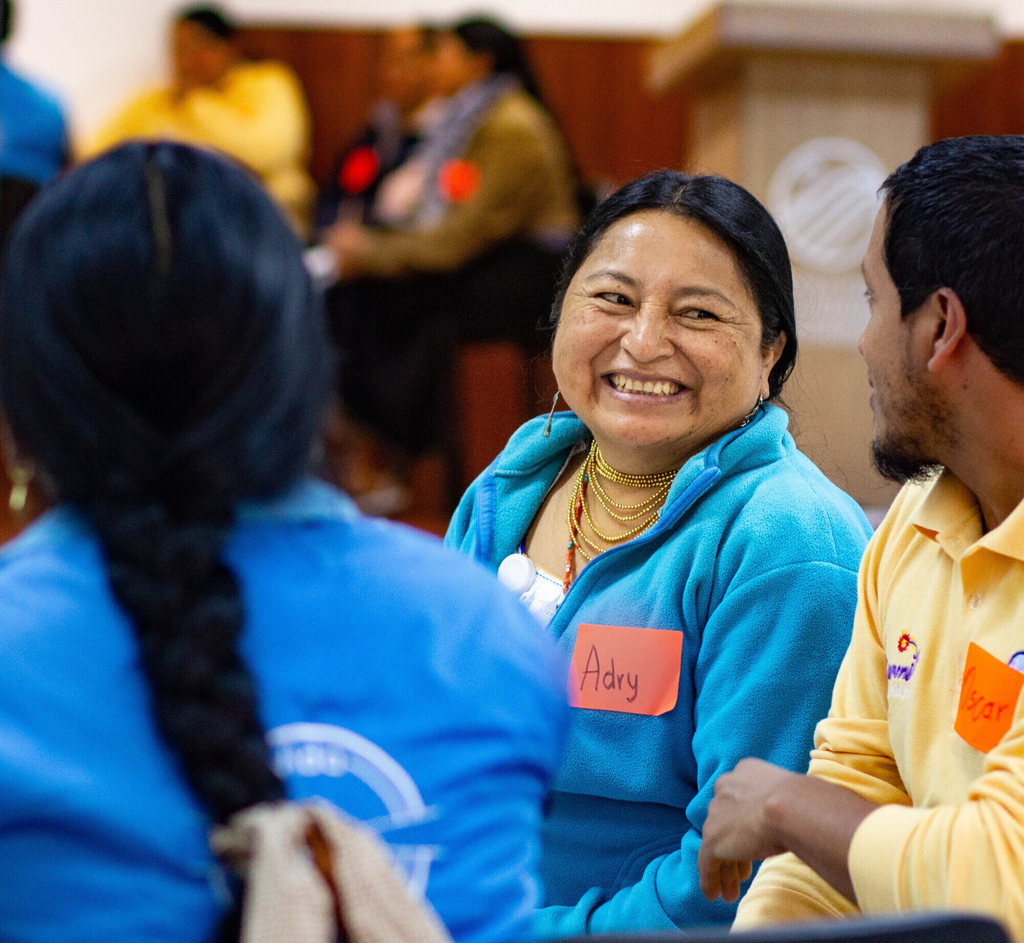
One of my personal highlights of these trainings was seeing one of our original group facilitators, Andy, step into a new role as a trainer.
Andy has been facilitating Vida Plena groups for four years, and his experience shows. He brought a lot of energy to the room, quickly suggesting ways to keep the group dynamic engaged, like breaking participants into small practice groups rather than doing everything as a full-room exercise. That kind of instinct comes from years of facilitating real groups.
Seeing someone who started as a facilitator now helping train the next generation is one of the clearest signs that the work is beginning to grow beyond the founding team.
Turning Technical Language into Plain Language
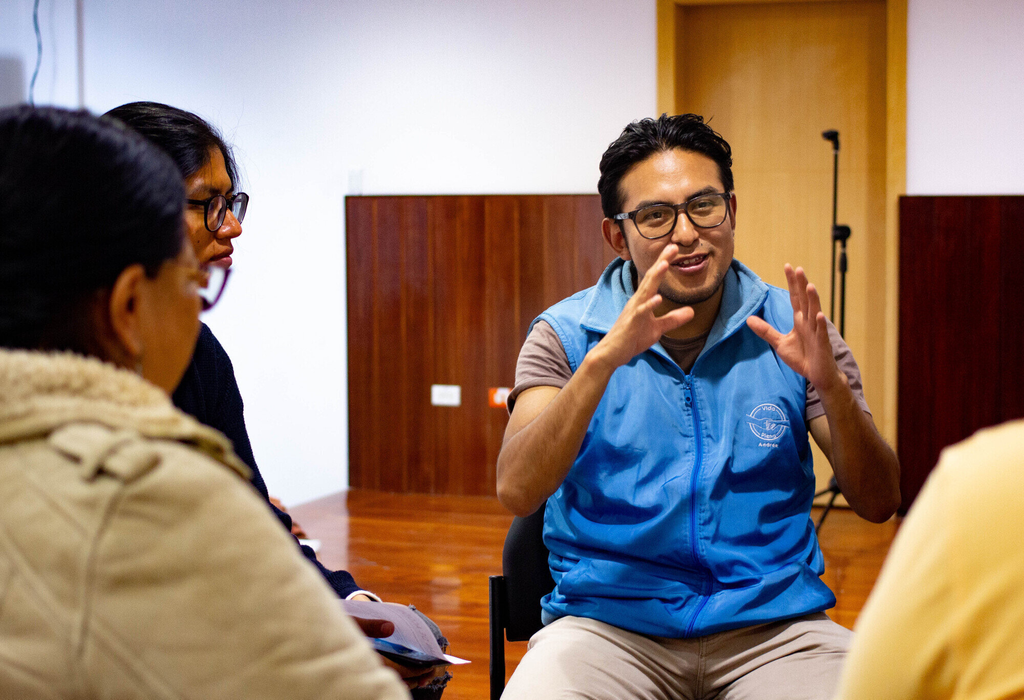
Because of some staffing changes, I ended up leading a portion of these trainings myself. Being in the room gave me a much clearer sense of what explanations land and which ones don’t.
Most of the people we train are community members and frontline staff, not clinical specialists. If the language becomes too technical, the model becomes harder to use in the real world. So we spend a lot of time translating complex psychological ideas into language that people can grasp quickly.
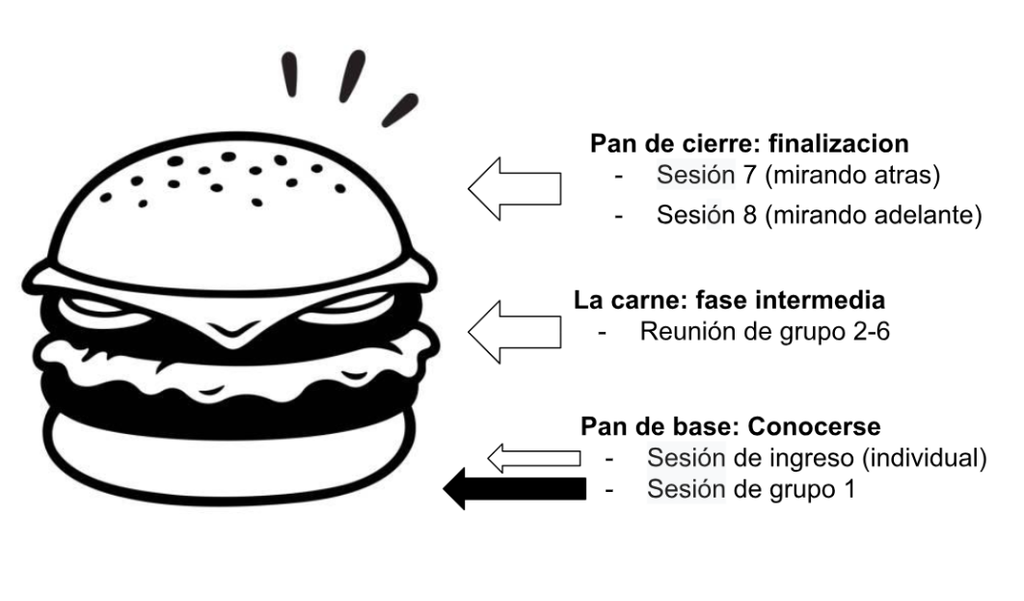
One example is something we now jokingly call the “hamburger metaphor,” a simple visual way to explain the structure of a group session.
Real-World Challenges
These past trainings also included some difficult moments. Regional strikes in Imbabura forced parts of one training online, and significantly delayed another.
In our most recent cohort, we had to navigate racial tension between participants from different national backgrounds. I had to fight back tears of gratitude for Dr. Bryan Cheng and Angela Paredes-Montero from Columbia University, who continue to support our work through virtual supervision and helped guide the group through those moments, stepping in at just the right moment.
Training facilitators is not only technical work, but it’s also very human work.
That kind of capacity takes time to build, but it’s exactly what allows community-based mental health support to grow.
And thank you for being part of that work.
Saludos de Quito,
Joy